
Storing medicine correctly is vital for your health. You want it to work safely and effectively. Many people worry about spoiling their expensive vials. Do not stress about this common storage issue. We have the exact answers you need right here. This guide covers safe fridge limits and storage tips. You will learn exactly how long is compounded tirzepatide good for in the fridge. Follow these rules to keep your doses potent. Let us protect your health and your wallet today.
For a full overview of how this treatment works, read our “Compounded Tirzepatide Guide | Results, Safety & Availability” today.
Why Refrigeration Matters for Compounded Tirzepatide
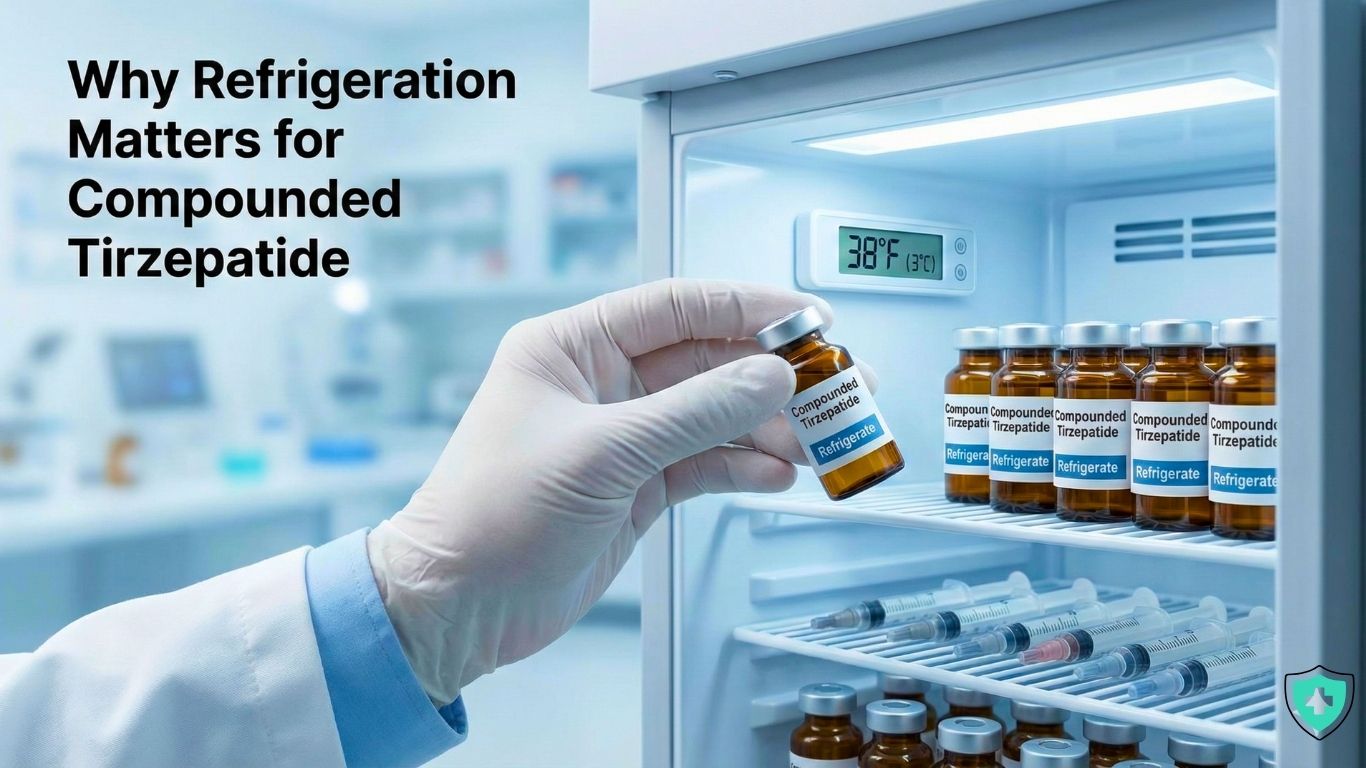
Compounded medications are delicate and need specific care. The fridge keeps the chemical structure stable and strong. Heat can rapidly break down active peptides. This makes the drug lose its intended effect. You might not see changes, but potency drops. Always keep it cold to ensure it works.
Bacteria can grow fast in warm liquid environments. Refrigeration stops harmful germs from multiplying in your vial. This protects you from serious infections or reactions. Safety is the main reason for strict temperature control. Treat your vial like fresh food, not dry pills. Cold storage effectively preserves safety. Discover more in our comparison: Is compounded tirzepatide the same as mounjaro
Shelf Life Guidelines for Unopened vs. Opened Vials
Unopened vials usually last until the labeled date. This date is set by the pharmacy’s testing. Do not use it past this specific time. Keep it sealed in the cold until ready. Check the paperwork for the exact compounding date. Every batch might have a slightly different timeline.
Once you puncture the top, the clock starts. Air and bacteria can now enter the vial. Most pharmacists recommend using it within 28 days. This rule applies even if liquid remains inside. Do not try to stretch it past this limit. Safety is more important than saving a little medicine.
You might wonder how long is compounded tirzepatide good for in the fridge. The answer changes once the seal is broken. Stick to the 28-day rule for opened vials. Mark the date on the box when you open it. This simple habit prevents you from using expired doses. Get the latest updates on How long will compounded tirzepatide be available
The 28-Day Rule for Punctured Vials Explained.
Why is twenty-eight days the magic number here? It comes from strict sterile compounding safety standards. Preservatives inside can only fight bacteria for so long. After four weeks, their protective power fades away. This increases the risk of contamination in the liquid.
Multiple needle punctures introduce new germs every time. Each dose draws in a tiny amount of air. This creates a breeding ground for harmful microbes. The fridge slows this down, but cannot stop it. That is why the timeline is strict and short. Never ignore this safety window for your health.
Some users try to use vials for months. Doctors strongly advise against this risky and unsafe practice. An infection at the injection site is dangerous. Discard the vial after four weeks to stay safe. It is not worth the risk for a few doses. Fresh medication is always the safest choice for you.
Understanding the Beyond Use Date on Your Label
Compounded drugs do not have standard expiration dates. They have a Beyond Use Date, or BUD. This date is calculated based on stability testing. It tells you the last safe day to use. You must find this date printed on your label. Never use the medication after this specific day passes.
This date assumes you stored the vial correctly. If it got hot, the date is invalid. The BUD applies only to unopened, refrigerated vials. It is shorter than the expiration timelines for commercial drugs. Pharmacies make these batches fresh for quick use. Respect this date to ensure the medicine works well. Stay safe from unregulated sources by reading about the “Compounding pharmacy tirzepatide lawsuit” today.
Why BUD Is Different From a Standard Expiration Date
Commercial drugs go through years of stability testing. They use preservatives to extend shelf life. Compounded versions are made specifically for immediate use. They lack the long-term stabilizers found in brand names. This is why their shelf life is much shorter. You cannot store them for years like pills.
The pharmacy sets the BUD in accordance with sterile guidelines. It focuses on sterility and chemical potency limits. An expiration date is a federal manufacturer’s guarantee. A BUD is a safety limit for custom mixes. Do not confuse these two very different dates. Treat the BUD as a strict safety deadline.
Find out the performance data here:
- Does compounded tirzepatide work as well as mounjaro
- Is compounded tirzepatide as effective as zepbound
Is It Safe to Keep Tirzepatide at Room Temperature?
Life happens, and sometimes you leave meds out. Short periods at room temperature are usually okay. Most peptides remain stable for up to 21 days. Some compounding pharmacies allow short room-temperature exposure, but this varies by formulation. Always follow your pharmacy’s guidance. This assumes the room is not overly hot. Do not panic if it sat out overnight. Just put it back in the fridge immediately.
However, continuous storage at room temperature is bad. It significantly and quickly reduces shelf life. You risk bacterial growth if it gets warm. Always aim to keep it between 36°F and 46°F. This is the sweet spot for peptide safety. Room temperature is only for emergencies or travel.
You asked how long is compounded tirzepatide good for in the fridge. Cold is best, but room temperature is okay for a brief time. Keep it below 86°F if it is out. Anything hotter than that will damage the drug. If it gets very hot, replace the vial. Do not inject medication that sat in high heat.
Steps to Take If You Accidentally Left Your Vial Out
Do not worry if you forgot your vial. Check the liquid carefully before you do anything. Most of the time, the medication is fine. Follow these simple steps to ensure it is safe.
- Inspect the liquid for cloudiness or strange particles.
- Place the vial back into the fridge immediately.
- Calculate how many hours it was left out.
- Keep the vial away from direct sunlight exposure.
- Call your pharmacist if it was very hot.
Speed is key when saving your medication. Get it cold again to stop any degradation.
How to Tell If Your Medication Has Gone Bad
You cannot always see if the medicine has spoiled. But there are some clear warning signs. Your safety depends on noticing these small changes. If the drug looks different, do not inject it. It is better to waste money than risk health. Trust your eyes when inspecting the vial before use.
Knowing how long is compounded tirzepatide good for in the fridge helps. But physical signs are your final safety check. Spoilage often happens due to heat or contamination. Bacteria can make the liquid look slightly different. Potency loss is invisible but affects your results. Be vigilant every time you prepare a dose.
If you feel pain or stinging, stop immediately. Unusual side effects can also indicate bad medication. If the liquid changes color, discard it now. Do not take chances with compromised injectable drugs. When in doubt, throw the vial away safely. Your health is worth more than one dose. If you’re asking “Why am i not losing weight on tirzepatide compound“, the answer might be in your fridge.
Visual Signs to Watch Out For: Cloudiness or Particles
Your medication should always look clear and colorless. Any change in appearance is a major red flag. You must check the vial under good light. Do not use it if you see these signs.
- The liquid looks milky, cloudy, or very hazy.
- Tiny solid particles are floating in the liquid.
- The color changes to yellow or light brown.
- The rubber stopper appears damaged or is leaking.
- The glass vial has cracks or small chips.
If you see any of these, stop now. Call your pharmacy to order a fresh replacement. Learn about the “The difference between compounded tirzepatide and mounjaro”
Why You Must Never Freeze Your Compounded Tirzepatide
Freezing is the worst thing for this medication. Extreme cold breaks delicate peptide bonds. Once the liquid freezes, the drug is ruined. It will not work even if it thaws out. The structure is permanently damaged by ice crystals. Never put your vial in the freezer compartment.
A frozen vial might look fine after thawing. But the medicine inside is now totally ineffective. You will be injecting useless liquid into your body. Ensure your fridge is not set too cold. Keep vials away from the back cooling vents. Accidental freezing happens often, so be very careful.
The Best Spot in Your Fridge for Maximum Potency
Use the middle shelf for the best temperature. This area stays the most consistent and cool. It is far from the cooling element and the door. This protects the vial from freezing or warming. You want a steady temperature for the medication. Stable cold keeps the drug potent and safe.
Knowing how long compounded tirzepatide is good for in the fridge depends on the placement. Do not bury it behind heavy food items. Keep it in a designated spot for easy access. Avoid the vegetable drawer, which can be humid. The middle shelf is the safest place for storage. This ensures the medicine lasts its full life.
Why You Should Avoid Storing Vials in the Fridge Door
The door is the warmest part of the fridge. Every time you open it, warm air rushes in. This causes the temperature to fluctuate. Compounded meds need stability to remain effective. Constant temperature swings can degrade peptides more quickly. It creates a cycle of warming and cooling.
We open the fridge many times a day. This exposes door items to room temperature air. Your butter and eggs might handle this fine. But medication is far more sensitive to these changes. The door does not hold the cold well. This can shorten the life of your vial.
You asked how long is compounded tirzepatide good for in the fridge. Storing it in the door reduces that time. The stress on the chemical structure causes damage. Keep it in the main body of the fridge. This simple change significantly protects your investment. Do not take the easy route with the door. Check out the Difference between compounded tirzepatide and zepbound
Protecting Your Medication from Light Exposure
Light is a silent killer for many medications. Peptides are sensitive to UV rays and bright light. Direct exposure can break down the chemical bonds. This makes the medicine weak and less effective. You might not see any physical change happen. The damage occurs silently at the molecular level.
Always keep the vial inside its original box. The cardboard provides a perfect shield against light. If you lost the box, use a pouch. A small makeup bag or sunglass case works. Just ensure no light hits the glass directly. This is a simple but vital storage rule.
Leaving it on a bright shelf is dangerous. Even the fridge light can add up over time. Dark storage ensures the potency remains at max. Treat the vial like a vampire: keep it in the dark. This helps you get the best possible results. Combine cold and dark for the best storage.
Tips for Traveling with Refrigerated Compounded Meds
You can travel with your medication very easily. You just need to plan ahead for cooling. Do not let travel ruin your weight loss progress. Use these tips to keep your meds safe.
- Use an insulated travel case with gel packs.
- Keep the medication in your carry-on bag.
- Never leave the medication in a hot car.
- Ask the hotel for a fridge immediately.
- Keep the vial upright to prevent leaks.
A little preparation keeps your doses safe wherever you are. Enjoy your trip without worrying about your meds.
How to Pack Your Cooler for Flights and Road Trips
Place ice packs on the bottom of the cooler. Put a towel over them to prevent freezing. Place the medication on top of the towel. This creates a barrier against extreme direct cold. You want it cool, not frozen solid. This setup keeps the air temperature perfect inside.
Check the cooler temperature if you travel far. Ensure the lid stays closed as much as possible. If the ice melts, replenish it right away. Knowing how long is compounded tirzepatide good for in the fridge helps travel. Treat the cooler like a portable fridge. Keep it out of direct sunlight.
When to Throw Away Leftover Medication Safely
It is hard to throw away expensive medicine. But using old leftovers is not worth the risk. If the vial has been open for 28 days, toss it. Even if there is a full dose left. The bacterial risk is too high to ignore. Your health is the priority, not the money.
Discard the vial if the expiration date passes. Throw it out if it was frozen accidentally. If it sat in a hot car, bin it. Do not try to salvage a compromised vial. Safe disposal ensures you only use potent drugs. Follow your local laws for needle and vial disposal.
Use a sharps container for the used vial. Do not just throw glass in the trash. This protects sanitation workers from accidental needle sticks. Safety continues even after the medicine is gone. Be responsible with your medical waste every time. A fresh vial is a fresh start for you. Keep an eye on the market: When will compounded tirzepatide no longer be available
FAQs
Can I use the vial after 28 days?
Ans: No, bacteria grow rapidly after the seal breaks. It becomes unsafe to inject into your body.
What if my fridge is not cold enough?
Ans: Move it to the back of the shelf. Use a thermometer to check the temperature daily.
Does the medication change color when it expires?
Ans: Sometimes it turns yellow or cloudy. Often it looks normal, but is no longer safe.
Can I refreeze the medication if it thaws?
Ans: No, freezing destroys the peptide structure. Once thawed, you must refrigerate it or discard it.
How long does it last at room temperature?
Ans: It is stable for up to 21 days. But you should keep it cold for safety.
Conclusion
Storing your medication correctly helps you lose weight. You invest time and money into your health. Do not let bad storage ruin your hard work. Keep it cold, dark, and away from heat. Check the dates on your label every time. Follow the rules to stay safe and healthy.
You now know how long is compounded tirzepatide good for in the fridge. Use this guide to protect your monthly supply. When in doubt, call your pharmacist for help. They can give you specific advice for your batch. Stay consistent with your shots and storage habits.
Information Collected Source
- FDA Compounding Regulations & Safety
- USP <797> Guidelines for Sterile Compounding
- Mounjaro Storage Instructions (Official)
- NIH: Tirzepatide Safety Data
Medical Disclaimer: This article is meant to share general information, not medical advice. Please talk to your healthcare provider before making any changes.
Reviewed & Verified By: CMH Health Editorial and Medical Review Team

Hello everyone, I’m Mehedi Hasan — a passionate health content creator and the founder of CMH Healths. Since 2015, I have been researching and writing about health topics with the goal of helping people live healthier and more informed lives. I focus on creating practical, research-based content on health and medicine that empowers readers to make confident, evidence-backed decisions. All my articles are fact-checked against official medical sources like the FDA and clinical studies.